The moment you need more space than your current home provides is almost always clearer than what to do about it. Moving carries enormous costs: real estate commissions, closing costs on the sale and purchase, moving expenses, and the premium you pay to buy into a larger home in a competitive market. In Central Arkansas, where homeowners in established neighborhoods like Pleasant Valley, Chenal Valley, the Heights, and the Hillcrest area have invested not just in their homes but in their locations, their neighbors, their children's schools, and their community routines, moving is often the wrong answer to a space problem that an addition can solve. Ash Construction builds room additions and home expansions that are structurally, aesthetically, and functionally integrated with the existing home; the goal is always for the addition to look and feel as though it was always part of the original design.
The critical word in that last sentence is well-matched. An addition that reads as an addition, where the roofline transition is abrupt, the exterior materials do not match, the interior finishes feel inconsistent, or the structural connection looks improvised, is a failure regardless of its square footage or cost. Achieving a clean transition requires careful attention to matching existing materials, understanding the structural logic of the original home, tying into existing HVAC and electrical systems appropriately, and designing the connection between old and new to feel intentional. This is the work we take most seriously on addition projects, and it is what separates our results from contractors who treat additions as simple stand-alone buildings attached to a house.
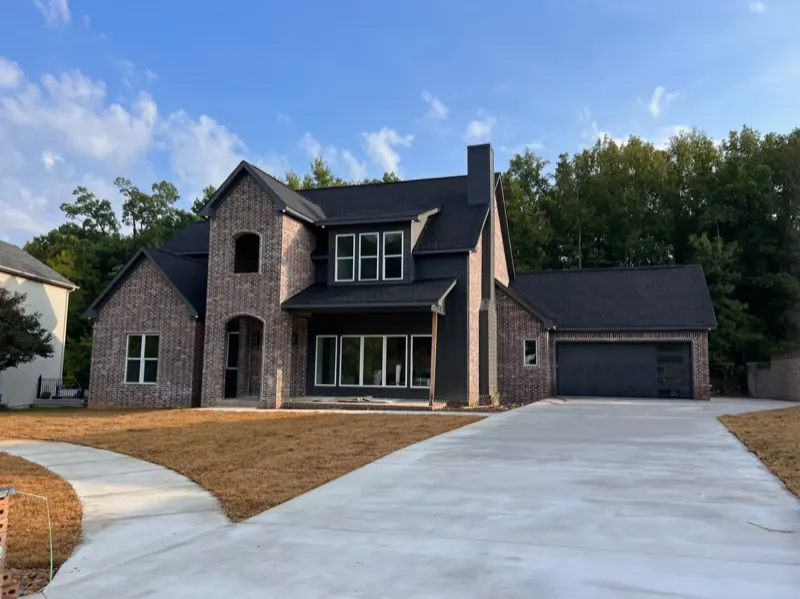
Types of Additions We Build
Ash Construction builds additions across the full range of types and sizes in Central Arkansas. Below are the most common project types we execute, along with what each involves.
Master Suite Addition
The master suite addition is the most commonly requested addition type for homeowners in Central Arkansas, and for good reason. Many homes built in the 1970s, 80s, and even early 90s have primary bedrooms and bathrooms that fall well short of current expectations for space, bathroom amenities, and closet capacity. A dedicated master suite addition, typically a bedroom addition with an attached bathroom and walk-in closet, solves all three problems simultaneously. We design these additions to be accessed naturally from the existing bedroom corridor, with exterior profiles that match the existing home.
Family Room or Great Room Addition
When the living spaces in a home feel too small for the family that occupies it, particularly in older ranch homes and split-levels where rooms were designed for a different era's social patterns, a family room or great room addition dramatically expands available living space. These additions are often open to the existing kitchen or dining area, requiring structural beam work at the connection point. We frequently combine a family room addition with a kitchen update on the same project, creating a fully open main-level living environment.
Second Story Addition
Adding a full or partial second story is the most significant addition project in terms of scope, cost, and impact. It is also, when done correctly, one of the most major. A second story addition can double a home's living space without consuming additional lot area, which makes it particularly valuable for homes on smaller urban or in-town lots where setback requirements limit outward expansion. Second story additions require engineering of the existing foundation and first-floor framing to verify load capacity, and they often involve living elsewhere during construction since the roof must be removed.
Garage Conversion to Living Space
An attached garage represents a significant amount of finished square footage that can be converted to conditioned living space at a cost well below that of building new square footage from scratch. Common conversion applications include home offices, bonus rooms, additional bedrooms, workout rooms, and in-law suites. Garage conversions require insulation of the slab and walls, installation of HVAC conditioning, electrical improvements, finishing of walls and ceiling, and, critically, addressing the garage door opening with a wall, window configuration, and exterior treatment that integrates naturally with the home's facade.
In-Law Suite
Multigenerational living is a growing priority for Central Arkansas families, and a dedicated in-law suite, whether a converted garage space, a ground-floor addition, or an above-garage apartment, provides privacy and independence for extended family members while keeping them close. We design in-law suites with appropriate accessibility features (step-free entry, wider doorways, accessible bathroom layouts) from the outset, ensuring the space can be used comfortably and safely at every stage of life. Properly designed, an in-law suite also functions as a rental unit or guest suite when not in family use.
Sunroom or Three-Season Room
A sunroom or three-season room addition creates a distinctive transitional space between interior and exterior living. a room that feels connected to the outdoors through extensive glazing while remaining protected from the elements. In Central Arkansas, a well-designed sunroom can be genuinely usable nine or ten months of the year with appropriate ventilation and ceiling fans. We build everything from simple screened room additions to fully insulated, HVAC-conditioned sunrooms with thermally broken window systems that perform year-round.
What Does a Home Addition Cost in Central Arkansas?
Addition costs in Central Arkansas are driven by the type of addition, the square footage being added, the finish level specified, and the complexity of integrating with the existing structure. The cost-per-square-foot for an addition is typically higher than for new construction because of the additional complexity of matching existing materials, connecting to existing systems, and working around an occupied home. The ranges below represent realistic total project costs for typical Central Arkansas conditions.
| Addition Type | Typical Range |
|---|---|
| Single Room Addition (approx. 12×20 ft, basic finish) | $35,000 – $65,000 |
| Master Suite Addition (bedroom + bath + closet) | $60,000 – $120,000 |
| Second Story Addition (full or partial) | $90,000 – $200,000 |
| Garage Conversion to Living Space | $25,000 – $50,000 |
| In-Law Suite (new construction addition with kitchen and bath) | $80,000 – $150,000 |
| Sunroom / Three-Season Room | $25,000 – $55,000 |
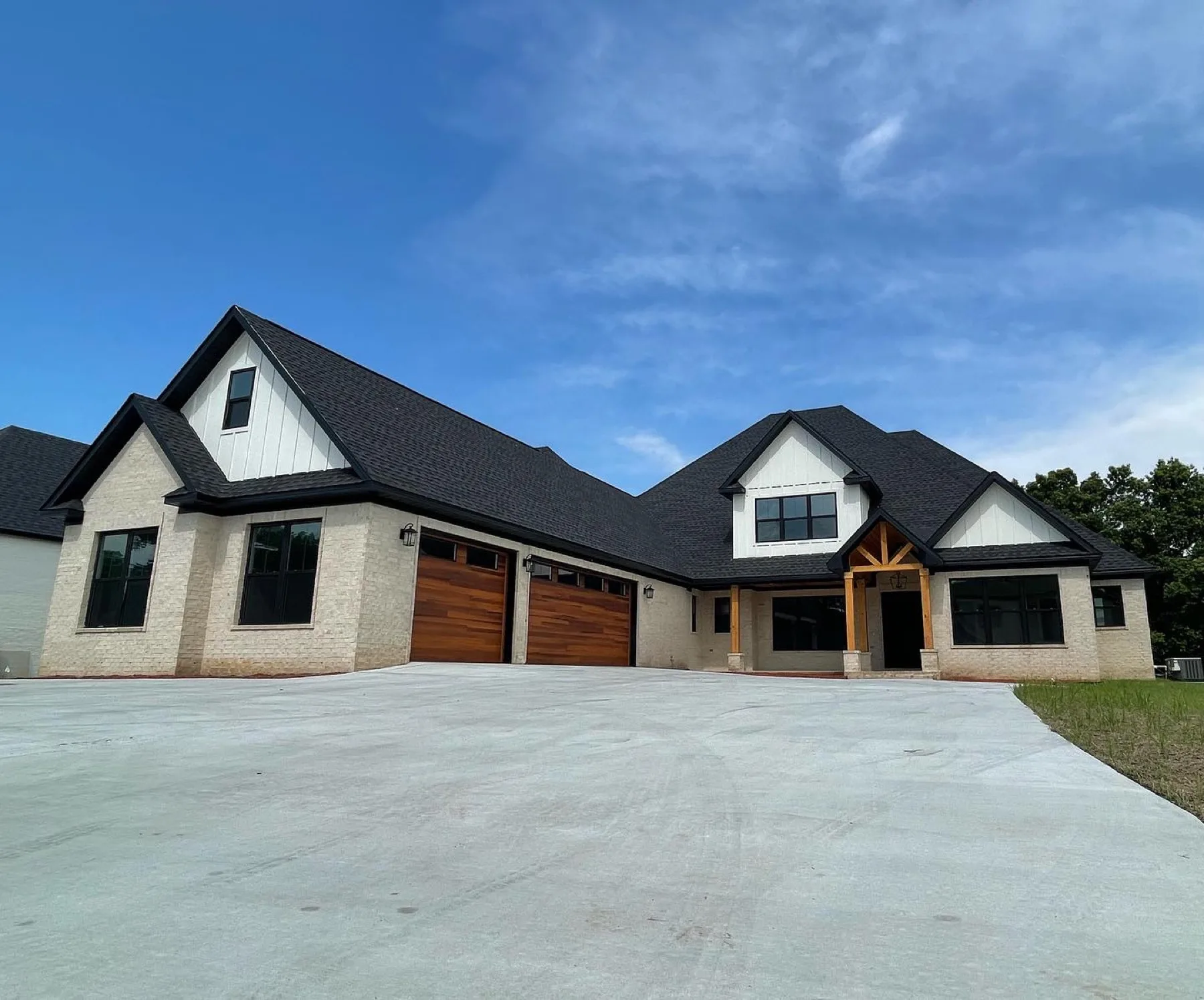
Structural Considerations for Home Additions
The structural work required for a successful addition is less visible than the finished room but equally important. Our approach to structural integration is the foundation of everything that follows.
Foundation Matching
The new addition must be supported on a foundation appropriate to its load and to Central Arkansas soil conditions. For most single-story additions, a monolithic slab or thickened-edge slab on compacted fill is appropriate. The connection between the new foundation and the existing foundation requires careful detailing to allow for differential settlement (new concrete shrinks and settles differently than old concrete) without transmitting cracking into the structure above. We consult with structural engineers on all addition foundations to make sure of proper design.
Matching the Roofline
Roofline integration is the single most important factor in whether an addition looks like it belongs or looks like an afterthought. We study the existing roof's pitch, overhang dimensions, fascia and soffit profiles, and material before designing the addition roof. Where the addition roof intersects the existing roof, we engineer a proper valley or hip connection that manages water appropriately and creates a visually clean junction. Poor roofline integration is the most common visual failure of residential additions, and we will not accept an outcome that looks disconnected.
Load-Bearing Walls and Opening Connections
Where the addition connects to the existing home by removing an exterior wall, that wall is almost always load-bearing. Engineering the replacement beam, sizing it appropriately for the span and bearing it on posts that carry loads to the foundation, is structural work that requires calculation and permit-required inspection. We do not improvise this work; every load-bearing modification receives engineering documentation and inspection sign-off before any finish work proceeds over it.
Matching Exterior Finishes
Matching the exterior materials of an existing home is sometimes straightforward and sometimes genuinely challenging. Brick from the 1980s and 1990s often is no longer in production, and finding a close visual match requires sourcing from specialty suppliers or salvage. HardiePlank and fiber cement siding profiles are generally matchable. Roofing shingle color and style should be matched as closely as possible or the entire roof section should be replaced with matching new material. We address this challenge specifically during the pre-construction assessment and propose solutions rather than leaving it for the homeowner to solve independently.
Permits & HOA Considerations in Central Arkansas
All home additions in Central Arkansas, regardless of size, require building permits. The permitting jurisdiction depends on the property's location: incorporated cities (Little Rock, Conway, Benton, Bryant, Maumelle, Sherwood, Cabot) each have their own building departments with their own review processes and timelines. Unincorporated areas of Pulaski, Saline, Faulkner, and Lonoke counties are permitted through the county, which has its own procedures.
In addition to municipal permits, homeowners in Chenal Valley, Maumelle, several neighborhoods in Conway, and many other planned communities in Central Arkansas must obtain HOA architectural review and approval before construction begins. HOA review processes vary significantly; some are straightforward and quick, others require formal submissions to architectural committees with review windows of 30 to 60 days. We identify HOA requirements during the pre-construction assessment and factor the approval timeline into the project schedule. Proceeding without HOA approval where required can result in stop-work orders, required modifications, and significant legal exposure.
Setback requirements are another critical constraint. Every lot has setback lines, minimum distances from property boundaries within which no structure may be built, and the available buildable area on your lot determines where and how large an addition can be. We review setback requirements during the initial site assessment and design the addition to comply. Some homeowners discover that their desired addition exceeds what setbacks allow, which may require a variance application or a design modification.
Our Addition & Expansion Process
Site Assessment & Feasibility
The first step on any addition project is understanding what is actually possible on your lot. We review survey documents, setback requirements, HOA covenants, existing utility locations, and the structural condition of the existing home where the addition will connect. We provide an honest assessment of feasibility, identify any constraints that would limit the project, and discuss alternative approaches if the ideal design is not achievable within regulatory requirements.
Design & Engineering
Addition design requires coordination between architectural layout, structural engineering, and integration with existing conditions. We work with licensed architects and structural engineers to produce permit-ready construction documents. HOA submissions, if required, are prepared and submitted during this phase. The design process includes detailed material matching analysis so that all exterior materials, window profiles, and roofing are specified before permitting.
Permits & Pre-Construction
We submit for building permits and manage the review process through approval. Simultaneously, we finalize the subcontractor schedule, order long-lead materials (windows are typically 4–6 weeks), and prepare the site. Utility locates are performed before any excavation. The construction schedule is developed in detail and communicated to you before the first shovel breaks ground.
Foundation & Framing
Foundation work proceeds first: excavation, form work, reinforcement, and concrete pour. After the foundation is cured and inspected, framing begins. The connection between the new framing and the existing structure, the moment the addition becomes physically joined to your home, is executed with particular care to maintain structural continuity. The existing roof is opened and the new roof framing is tied in, which requires temporary weatherproofing to protect the interior during this brief exposed period.
Systems, Exterior & Interior Finishes
Mechanical rough-in (extending HVAC, electrical, and plumbing from the existing home into the new space), exterior sheathing, weather barrier, windows, and exterior finish installation all proceed after framing inspection. Insulation and drywall follow the rough inspections. Interior finishes are then installed in coordination with any adjacent spaces in the existing home to achieve clean floor, trim, and paint transitions at every junction point.
Interior Connection & Punch List
The temporary barrier between the existing home and the new addition is removed, floors are transitioned, trim is matched, and paint is completed through the junction. This is the moment the addition truly joins the home. We conduct a thorough punch list review followed by a homeowner walkthrough. Final inspection and certificate of completion are obtained from the building department.
"We added a master suite and a sunroom to our 1990 home in Pleasant Valley rather than moving to a larger house. Ash Construction matched the brick perfectly; we were genuinely impressed that they tracked down the original manufacturer and sourced a matching run. The interior finishes transition so naturally that guests who have been to our home before don't realize there is an addition unless we tell them. That was exactly what we wanted."
James & Patricia W., Pleasant Valley, Little Rock, Addition Completed 2024
Frequently Asked Questions
Will the addition match my existing home's style and materials?
Matching existing materials is one of the first technical challenges we address on every addition project, and it is a challenge we take seriously. For brick homes, we source matching brick through specialty suppliers and salvage dealers and present samples for approval before ordering. Fiber cement siding profiles are generally available from manufacturers for older product lines. Roofing shingle matches are possible when the same product line is still in production; otherwise, we recommend replacing the entire affected roof section with new matching material. Interior flooring matches, trim profiles, and paint are coordinated in the design phase. We do not consider an addition successful if it reads visually as an addition.
How disruptive is it to live in the house during an addition project?
Single-story additions on the footprint of the home are typically manageable to live through, particularly if the addition is on one side of the house and the living areas are on the other. Second story additions are significantly more disruptive: the roof must be removed and temporarily weatherproofed, which is not compatible with comfortable living. We assess disruption level during the pre-construction assessment and provide an honest recommendation about whether living arrangements should be made. We maintain temporary barriers and clean the site daily to minimize impact during livable projects.
Do I need an architect, or does Ash Construction handle design?
For most addition projects, Ash Construction manages the design process through our working relationships with licensed residential architects and structural engineers. You do not need to independently retain an architect. For complex additions, such as second story additions, large footprint expansions, or projects in historic districts with design review requirements, full architectural services may be warranted. We discuss the appropriate design process during the initial consultation and include design and engineering fees in our project proposal transparently.
What addition type provides the best return on investment for resale?
In the Central Arkansas market, master suite additions and bathroom additions to homes that are deficient in bathroom count relative to bedroom count consistently provide the strongest resale value returns. A four-bedroom home with only one and a half baths is at a significant competitive disadvantage; adding a second full bath addresses that deficiency directly. Family room and great room additions also perform well in established neighborhoods where open-concept living is a buyer expectation. Garage conversions, while lower in cost, may reduce value in markets where garage parking is expected; this is worth discussing with a local real estate agent before proceeding.
If you are considering a major addition in conjunction with interior renovations to existing spaces, our Whole-Home Renovations service offers a full approach to transforming both new and existing square footage as a coordinated project. For homeowners who have determined that the scope of needed improvements makes building new more practical than adding on, see our Custom Home Building page for a full overview of the new construction process.
Ready to Add Space to Your Home?
The space you need may be closer than you think, and significantly less expensive than moving. Ash Construction's addition and expansion team has the structural expertise, material sourcing knowledge, and design coordination capability to deliver an addition that genuinely belongs to your home. Call us at 501-430-4410, email us at ashconstructionar@gmail.com, or click below for your free in-home consultation and estimate.