Bathroom remodeling is having a moment in Central Arkansas. Homeowners who spent years living with dated tub-shower combos, pink tile, and Hollywood-strip lighting are finally pulling the trigger, and what they're choosing is decisively different from what was popular even five years ago.
Social media has democratized design inspiration. A homeowner in Conway can find the same spa bathroom inspiration that's driving renovation decisions in Nashville or Denver. The result: Central Arkansas bathrooms are getting dramatically more sophisticated, more personal, and more intentional. Here are the six trends we're seeing dominate bathroom remodeling projects across the region in 2026.
Walk-In Showers Are Replacing Tub-Shower Combos
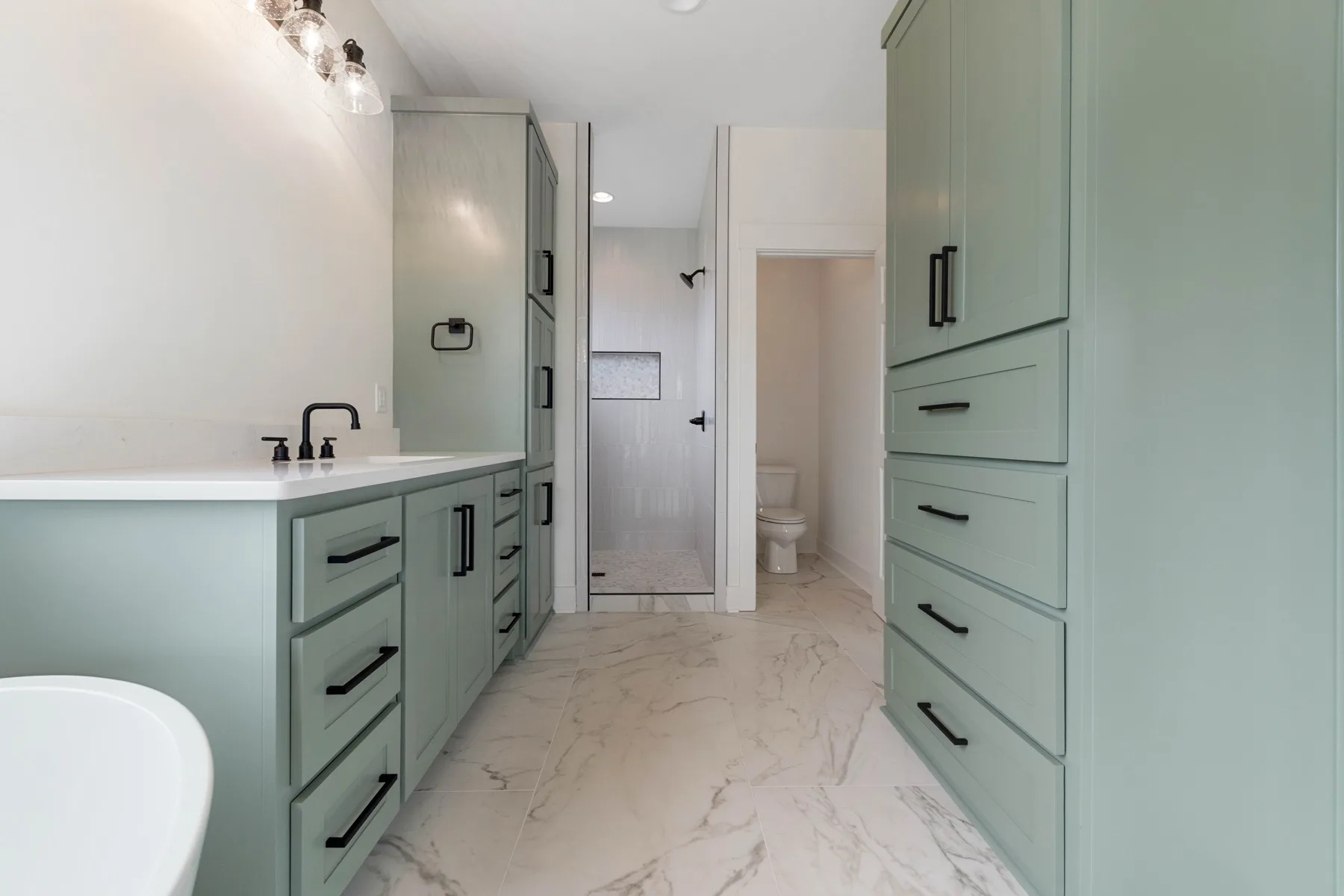
The combination tub-shower has been the default master bathroom layout in American homes for decades. In 2026, Central Arkansas homeowners are removing them at a steady pace, replacing the combo with a dedicated walk-in shower and, in many cases, a freestanding soaking tub as a separate design element.
What's driving this? Most soaking tubs go largely unused. According to surveys of homeowners who've completed bathroom remodels, the tub is used a few times a year while the shower is used daily. Converting that footprint to a generous walk-in shower dramatically improves the everyday experience of the bathroom.
The walk-in showers we're building in Central Arkansas in 2026 share several characteristics:
- Frameless glass enclosures: ¾" or ⅜" tempered glass with minimal hardware gives a clean, spa-like appearance and makes the shower feel larger
- Curbless (zero-entry) design: no threshold to step over, which also makes the bathroom fully accessible for aging-in-place; wet rooms are a variation on this theme
- Large-format tile: 24x48" rectified porcelain tiles with minimal grout joints create an expansive, luxurious feel
- Rainfall showerheads: ceiling-mounted rain heads, often in matte black or brushed nickel, are nearly universal in higher-end builds
- Body spray jets and handheld wands: multi-function shower systems from brands like Kohler, Delta Trinsic, or Grohe
- Built-in niches: recessed shelving in the shower wall, tiled to match the surround, replaces plastic caddies and looks infinitely better
A full walk-in shower conversion (demo, waterproofing, large-format tile, frameless glass enclosure, and new fixtures) typically runs $8,000–$18,000 in Central Arkansas depending on size and material selections.
Warm Earth Tones and Natural Materials Are In
The cool grey-and-white bathroom palette that dominated the 2010s is giving way to something warmer, more organic, and more personal. Central Arkansas homeowners in 2026 are gravitating toward warm greige, terracotta, clay, and warm wood tones: palettes that feel grounded, sophisticated, and far less likely to look dated in 10 years.
Zellige tile, handmade Moroccan tiles with organic variation, slight imperfections, and a distinctive luminosity, has moved from high-end design publications to mainstream Central Arkansas bathrooms. Their variation in color and texture creates an accent wall that feels handcrafted rather than manufactured. They're most commonly used on shower accent walls, behind vanities, or as a feature niche. Zellige runs $15–$35 per square foot for the tile alone; figure $25–$45 installed.
Travertine is back. Natural travertine tile and travertine-look porcelain (at a fraction of the cost) are appearing in bathrooms across Central Arkansas. The warm ivory and beige tones with natural veining work beautifully with the warm color palettes trending right now. Unsealed travertine requires more maintenance than porcelain, but high-quality travertine-look porcelain delivers the aesthetic with almost no maintenance.
Warm wood tones in vanities, whether real wood or wood-look materials, add organic warmth that white-painted cabinets simply don't provide. White oak, walnut, and warm-toned stains are popular choices in Central AR master bath remodels this year.
How to incorporate warm tones without dating your bathroom: Anchor the space in a neutral warm white or warm greige for walls and main tile surfaces. Layer in the terracotta or warm wood as accent elements: a feature tile wall, wood vanity, or travertine-look floor. The neutral base gives you flexibility to update accents over time without a full remodel.
Floating Vanities and Storage Innovation
Wall-mounted (floating) vanities have gone from a boutique hotel aesthetic to a mainstream master bathroom feature in Central Arkansas. The appeal is practical as much as visual: floating vanities are easier to clean underneath, make small bathrooms feel larger, and allow for custom height installation (a small but meaningful comfort upgrade).
The most popular configuration we're seeing in 2026: a double floating vanity 60–72" wide with under-counter storage, paired with a recessed medicine cabinet or large LED mirror above. Integrated lighting, either an LED strip under the vanity or backlit mirrors, adds ambiance and function.
Storage innovation is keeping pace with the cleaner aesthetic:
- Recessed medicine cabinets with LED-framed mirrors: deeper than standard, with integrated defog, dimming, and even USB charging
- Tall linen towers adjacent to the vanity, keeping towels and toiletries organized without taking floor space
- Under-vanity drawers with full-extension glides: the days of doors opening into your knees are largely over
- Vessel sinks vs. undermount: vessel sinks (a sink bowl sitting on top of the counter) remain popular for their statement aesthetic, while undermount sinks are more practical for everyday use. Both are seeing strong demand.
Smart Bathroom Features Central AR Homeowners Are Adopting
Technology is entering the bathroom more quickly than most homeowners expect, and much of it is practical rather than gimmicky. Here's what Central Arkansas homeowners are actually installing:
Heated Floors (Radiant Heating)
Electric in-floor heating systems like Schluter Ditra Heat or Nuheat are becoming a near-standard upgrade in Central Arkansas master bath remodels. Arkansas winters aren't brutal, but a warm tile floor on a 32-degree morning is a noticeable quality-of-life improvement. Cost: $800–$2,500 for a typical master bath, including installation and a programmable thermostat.
Smart Mirrors with Defog and Dimming
LED backlit mirrors with integrated defog (a heating element behind the mirror prevents fogging after showers), brightness/color temperature dimming, and built-in Bluetooth speakers are selling at a high rate. Brands like Kohler Verdera and Robern offer quality options at $400–$1,200+ depending on size and features.
Bidet Seats and Smart Toilets
Bidet seats have crossed into the mainstream in American bathrooms. Brands like Toto (the Washlet series) and Kohler offer bidet seat upgrades for $400–$1,800 that fit most standard toilets. Smart toilet systems with integrated bidet, heated seat, self-cleaning nozzle, and auto-flush are increasingly common in high-end master bath remodels.
Heated Towel Bars and Bluetooth Exhaust Fans
Plug-in or hardwired heated towel bars ($150–$600) are a popular add-on that costs relatively little and delivers noticeable luxury. Exhaust fans with integrated Bluetooth speakers (Broan, Delta BreezSignature) have replaced standard exhaust fans in nearly every bathroom we remodel; you get music in the shower without a separate speaker system.
Accessibility and Universal Design
As Baby Boomers continue renovating their homes and multigenerational living becomes more common, accessible bathroom design has moved from institutional necessity to mainstream design consideration. The key shift: accessibility features now look beautiful rather than clinical.
Grab bars that look like design choices: brushed nickel or matte black grab bars that match the other fixtures in the bathroom are indistinguishable from towel bars. They provide safety without signaling "I had to install this." Brands like Moen Home Care and Delta offer grab bars in finishes that coordinate with their standard fixture lines.
Roll-in and curbless showers are both an aging-in-place feature and a mainstream design preference. A properly designed zero-entry shower with a linear drain looks sleek and contemporary while also accommodating wheelchairs and walkers.
Comfort-height toilets (17–19" from floor to seat vs. the standard 15") are now specified in virtually every bathroom remodel we do; the ergonomic advantage is real for adults of all ages, not just seniors.
Wider doorways: standard bathroom doors are 28–30" wide. A 36" door accommodates a wheelchair and also just makes the bathroom feel less confined. In a remodel where the wall is already being opened up, adding door width is a modest incremental cost with meaningful long-term benefit.
Organic Shapes and Spa-Inspired Design
The right-angle rigidity of early 2000s bathroom design is softening. Organic, curved forms are appearing in freestanding tubs, vanity mirrors, and fixture selections. The overall aesthetic goal: a bathroom that feels less like a utility room and more like a personal sanctuary.
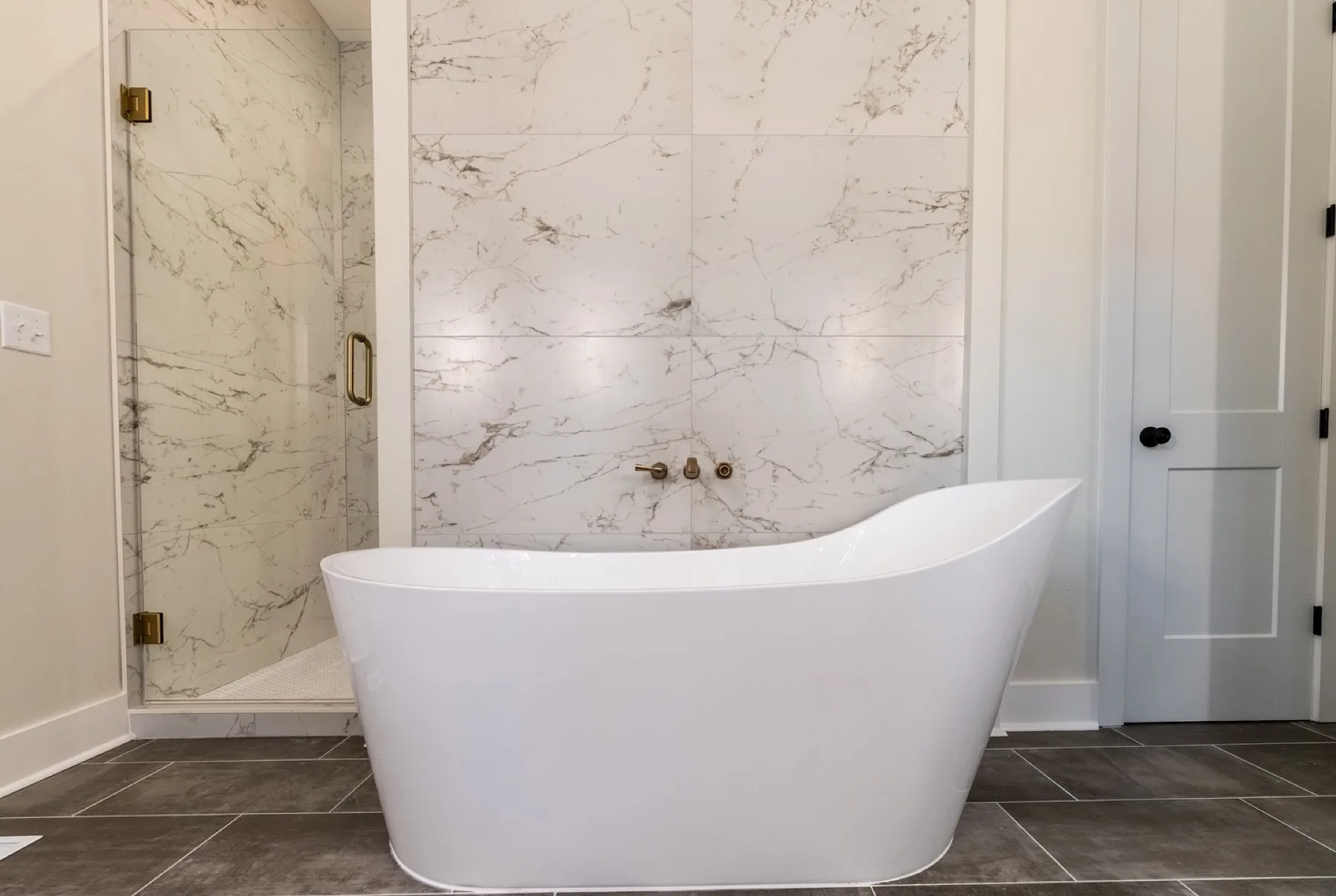
Freestanding soaking tubs remain highly popular in master bathrooms as a design centerpiece, even as the functional tub-shower combo disappears. Oval freestanding tubs in matte white or matte black draw the eye and anchor the master bath design. Acrylic freestanding tubs run $600–$2,000; cast iron options from $2,500–$8,000+.
Mixed metals are now accepted practice in bathroom design. The old rule of matching all metals (all brushed nickel, or all chrome) has given way to intentional metal mixing: matte black fixtures with warm brass accents, or brushed nickel with aged bronze hardware. The key is intentionality: two or three metals with a clear hierarchy looks designed; more than three looks disjointed.
Lighting design has finally gotten the attention it deserves in bathroom remodels. Rather than a single overhead light and mirror sconces, thoughtful bathroom lighting now layers ambient (overhead), task (flanking the mirror or above it), and accent (LED niche lighting, under-vanity strips) to create a bathroom that looks and functions beautifully at any time of day.
What This Means for Your Budget
Not all of these trends cost the same to implement. Here's a practical framework for where to spend and where you can save:
- Worth spending on: Quality waterproofing system (Schluter Kerdi or similar), frameless glass enclosure, in-floor heating; these affect long-term durability and daily enjoyment and are difficult to retrofit later
- High visual impact, moderate cost: Zellige or large-format tile as a single accent wall rather than throughout; LED backlit mirror; floating vanity
- Easy add-ons: Heated towel bar, Bluetooth exhaust fan, bidet seat; all can be added with minimal installation disruption and relatively low cost
- Where to save: Porcelain tile that mimics natural stone delivers 90% of the aesthetic at 40–60% of the cost; semi-custom vanities versus full custom offer excellent value in mid-range remodels
A thoughtfully designed bathroom remodel in Central Arkansas that incorporates several of these trends runs $18,000–$45,000 for a master bath and $8,000–$18,000 for a secondary bath. The return on investment for a quality bathroom remodel is strong; appraisers consistently note updated bathrooms, and buyers at the $300,000+ price point increasingly expect them.
Ready to Remodel Your Bathroom?
Ash Construction designs and builds beautiful bathrooms across Central Arkansas. From design consultation through the final tile installation, our team handles every detail. Request a free estimate and let's talk about your vision.
Request a Free Estimate 501-430-4410