Building a custom home is one of the most exciting decisions a family can make, and one of the most financially and emotionally complex. The gap between "this will be amazing" and "why did nobody tell us about this?" is usually explained by a handful of things that first-time custom home builders simply didn't know going in.
Arkansas is genuinely a great state to build in. Land costs here are a fraction of what they are on the coasts. Central Arkansas has experienced, qualified builders who've been doing this work for decades. The landscapes, from the rolling hills west of Little Rock to the river bottoms and pine-covered terrain east and south, are beautiful. But building a custom home anywhere requires navigating real complexities. These five insights will give you a meaningful head start.
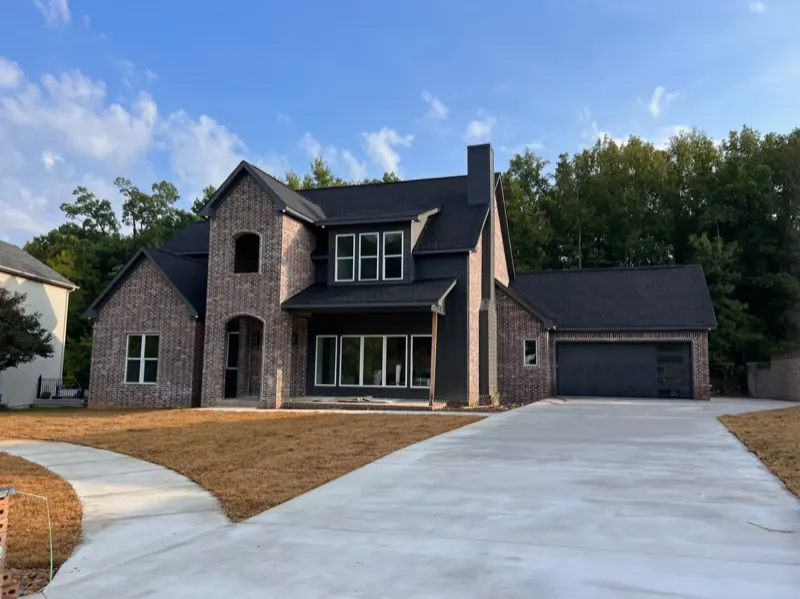
Lot Selection Will Make or Break Your Project
Most first-time custom home builders focus intensely on the house design and give relatively little attention to the lot until it's time to write a check. This is backwards. The lot determines what you can build, how much it costs to build it, how long the project takes, and how much the finished home is worth.
In Central Arkansas, soil is the first conversation to have. Clay soils, especially the expansive red clay common in much of Pulaski and Saline counties, can create significant foundation challenges. Expansive clay swells when wet and shrinks when dry, and without proper soil testing and an engineered foundation design, you can end up with cracked slabs or worse. A geotechnical soil test ($800–$2,500) before you make an offer on a lot is money exceptionally well spent.
Utilities access matters enormously. A lot with city water and sewer access in an established subdivision is ready to build. A rural 10-acre lot may require:
- A well (drilling, pump, pressure tank): $8,000–$20,000+ depending on depth
- A septic system (conventional, alternative, or aerobic depending on perc test results): $6,000–$18,000
- Electric service extension from the nearest pole: $15–$40 per foot, which can add $10,000–$40,000 for rural lots
- Internet/fiber access, increasingly important and not always available in rural areas without significant investment
Flood zone status is non-negotiable research. Many lots along the Arkansas River, its tributaries, and in low-lying areas across Central Arkansas carry flood zone designations from FEMA. Flood insurance on a custom home can add $2,000–$8,000 per year to your ownership cost. Check the FEMA Flood Map Service Center (msc.fema.gov) before making an offer, and have your builder or a civil engineer evaluate drainage patterns across the lot.
Lot clearing and grading in Arkansas ranges from $2,000 for a flat, clear lot to $15,000+ for heavily wooded or steeply sloped terrain. Stump grinding, tree removal, and grading to achieve positive drainage away from the foundation are all line items that belong in your budget before you break ground.
Deed restrictions and HOA covenants govern what you can build in most established subdivisions and many newer developments. Review these documents carefully before purchasing, they may restrict square footage minimums, exterior materials, garage placement, fence styles, outbuildings, and more.
Actionable advice: Have your builder or a civil engineer walk the lot with you before you make an offer. A 2-hour site evaluation can reveal utility access challenges, drainage problems, soil red flags, and grading requirements that fundamentally affect your project budget.
Understand the Full Cost of Building, Not Just Per Square Foot
The most common budget shock in custom home building happens when buyers realize the per-square-foot construction cost they budgeted for is only part of the total investment. In Central Arkansas, custom home construction typically runs $150–$350+ per square foot, and that's for the house structure itself. Here's what that number often does not include:
- Land cost: typically separate from construction budget
- Site preparation: clearing, grading, erosion control: $5,000–$20,000
- Driveway: concrete or asphalt: $3,000–$15,000+ depending on length and material
- Landscaping: sod, plants, irrigation: $8,000–$40,000+
- Well and septic (if applicable): $15,000–$40,000
- Fencing: $3,000–$12,000+ depending on linear footage and style
- Permit fees: $2,000–$8,000 depending on municipality and project value
- Engineering and soil testing: $2,000–$6,000
- Architectural fees (if using a separate architect): 8–15% of construction cost
- Construction loan interest, often overlooked in total cost calculations
Always budget a 10–15% contingency above your contractor's estimate. This is not pessimism, it's financial discipline. Every custom home build encounters surprises: soil conditions, utility access complications, design changes the owner decides to make mid-build, or material prices that shift between bid and installation. Builders who don't tell you about contingencies aren't doing you a favor.
On financing: most custom home builds use a construction loan that converts to a permanent mortgage at project completion. Construction loans typically require a larger down payment (20–25%), charge interest on draws as the project progresses, and have stricter underwriting requirements than a standard purchase mortgage. Talk to a lender who specializes in construction lending early in your planning process, your borrowing capacity may significantly influence your scope decisions.
The Design Phase Is Where You Save (or Waste) the Most Money
Decisions made on paper are inexpensive. Decisions made during construction are expensive. Decisions reversed after construction are very expensive. This simple truth shapes everything about how to approach the design phase of a custom home.
In Arkansas, you'll generally choose between two paths: a design-build firm that handles both design and construction under one contract, or an architect-led design with a separate general contractor. Design-build tends to be faster to get into construction and often results in tighter cost control because the designer and builder are aligned from the start. The architect-plus-GC path offers maximum design flexibility and allows you to bid the construction to multiple contractors, but coordination between architect and builder requires more active management.
Value engineering is the practice of finding ways to achieve the design intent at lower cost through material substitutions, structural simplifications, or layout adjustments. Examples: changing an open-rafter vaulted ceiling to a standard truss vault saves $8,000–$20,000 with minimal visual difference. Switching exterior material from custom brick on all four sides to brick on the front and fiber cement on the sides and rear saves $15,000–$30,000 on a typical home. Good builders bring value engineering ideas proactively; you don't have to sacrifice your vision to get smart value.
Permitting in Arkansas requires complete, stamped construction documents. In most Central Arkansas municipalities, residential permit review takes 3–6 weeks. Arkansas requires a licensed contractor to pull the building permit for new construction. Budget 4–8 weeks from final plan submission to permit approval, and do not ask your crew to start any construction before the permit is in hand.
Make all your selections before breaking ground if at all possible. Tile, cabinet style and color, countertop material, plumbing fixtures, lighting fixtures, flooring, exterior materials, window styles, every one of these has a lead time and a cost. Changing your tile selection after the shower is already waterproofed and set costs five times what it would have cost to make a different selection during the design phase. Organized homeowners who complete their selections before demolition or framing begins have dramatically smoother builds.
Choosing the Right Builder Is the Most Important Decision You'll Make
You will live in this home for potentially decades. The builder you choose will shape the experience of getting there and the quality of what you end up with. This decision deserves as much time and care as any design decision.
In Arkansas, general contractors who do work over $20,000 in value are required to hold a license from the Arkansas Contractors Licensing Board (ACLB). You can verify any contractor's license at aclb.arkansas.gov in under a minute. This is your first filter, if a contractor isn't licensed, nothing else matters. Also request a certificate of general liability insurance naming you as an additional insured, and ask for their workers' compensation policy. Workers' comp protects you from liability if a subcontractor's employee is injured on your property.
Red flags to watch for:
- Can't produce a current ACLB license number
- Asks for 50% or more upfront before work begins
- Won't give you references from completed projects (not just phone numbers, actual homes you can visit)
- Produces a vague, one-page contract with no scope of work details
- Uses pressure tactics: "I have another project starting Monday if you don't sign today"
- No physical business address or professional email
- Requests cash payments or doesn't provide receipts
Interview at least three builders before making a decision. Visit real completed projects when possible, not just showrooms or photos. Ask to speak with clients from projects completed in the last 12–18 months. Ask those references the hard questions: Did the project finish on time? On budget? How did the builder handle problems? Would you hire them again?
Understand the contract before you sign it. A good custom home contract defines the scope of work in detail, specifies what is an "allowance" (a budget placeholder) versus a fixed specification, describes the change order process (how you add or change scope, what it costs, how it affects the schedule), and defines the payment draw schedule tied to construction milestones. Vague contracts produce disputes. Clear contracts protect everyone.
Don't hire based on price alone. The custom home industry is where the consequences of choosing the lowest bidder are most severe. A builder who underbids to win the job will recover their margin through change orders, value substitutions you didn't authorize, or by walking away from the project mid-construction. Price should be one factor among many, reputation, communication style, license status, and demonstrated quality of work are equally or more important.
Communication Is the Secret to a Successful Build
Projects don't fail because of bad concrete or the wrong tile. They fail, or at least become deeply stressful, because of broken communication. The good news: communication is one of the few things in a custom home build that you have significant control over.
Establish communication norms at project kickoff. Who is your point of contact on the builder's side? How will updates be delivered, weekly email, project management app, or a standing Friday call? What's the process for you to reach someone if you visit the site and see something concerning? Getting answers to these questions in the first week of the relationship prevents weeks of frustration later.
Visit the site regularly, ideally weekly during framing, rough-in, and finishing phases. You're not there to manage the crew; you're there to stay informed and catch anything that doesn't look right while corrections are still inexpensive. The frame walk (when framing is complete) and the drywall walk (before drywall installation) are the two most important site visits you can make. After drywall is up, making changes inside walls is a significant cost.
Change order discipline is non-negotiable. Every verbal conversation that results in a scope change, adding a window, moving an outlet, upgrading a fixture, must be documented in a written change order before the work happens. "We talked about it on-site and I assumed it was included" is the most common source of construction disputes. If your builder makes a verbal agreement and doesn't follow up with a change order, ask for one. A good builder will be glad to provide it.
Decision fatigue is a real phenomenon in custom home building. You'll make hundreds of decisions, some trivial, some expensive, over the course of a build. Homeowners who prepare by organizing selections in advance, working with a designer on finish palettes early, and making decisions proactively rather than reactively have dramatically less stressful experiences. Cabinet lead times, tile, and plumbing and lighting fixtures all need to be ordered well in advance. Your builder should give you a selections deadline that aligns with the construction schedule.
Finally, celebrate the milestones. The frame walk is genuinely exciting: that is when your home's three-dimensional form becomes real for the first time. The day drywall goes up and rooms appear for the first time is meaningful. The final walkthrough before move-in is a culmination of years of planning and months of construction. A custom home build is a long journey, acknowledge the milestones along the way.
Ready to Start Planning Your Custom Home?
Ash Construction has been building custom homes across Central Arkansas since 2007. We bring transparency, craftsmanship, and clear communication to every project. Contact us to discuss your vision and get a detailed project estimate.
Request a Free Consultation 501-430-4410